
My dearest would confirm, if you were able to ask, that I have a particular skill. That is the ability to fall asleep in most any space regardless of my surroundings.
The steady hum of a ship’s engines, or the clackety- clack of a fast moving train makes my eyelids droop, putting me to sleep within minutes. I’ve slept in airports waiting for a flight, lulled by the white noise of people in transit. If I can find two seats together, pulling a cap down over my eyes on the coach has the same effect.
These sleep environments have something in common. They are all inside.
A Different Set of Skills
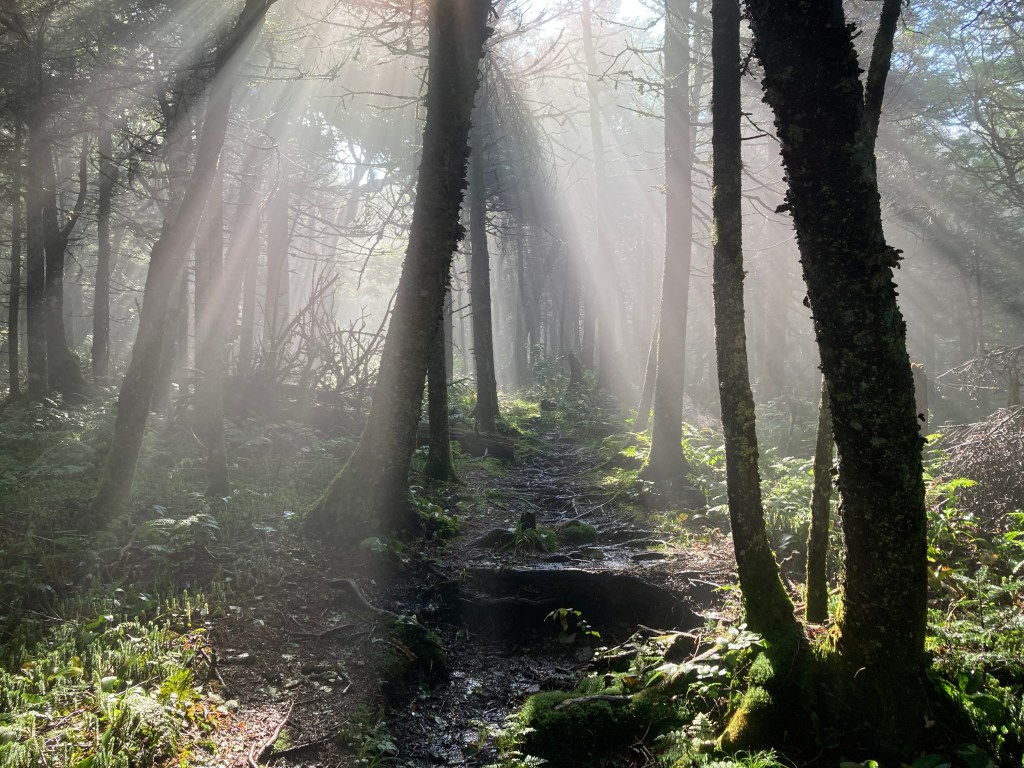
Sleeping outside is a bit different. I’ve heard it said that sleeping outdoors is a skill, and I’ve come to believe this wholeheartedly. Perhaps you’ve had difficulty falling asleep in a hotel room? Unfamiliar sleep environments create unease. Now picture yourself deep in the woods, the sounds of animals and insects, owls and the creak of branches. The wind or weather is not shut outside your window. Your security is not a locked door, but a paper thin sheet of tent material separating you from what’s on the other side. How does one get to sleep?
Helpers
- Practice: Being able to put yourself at ease, and prepare yourself to sleep requires practice. Before a long backpack, I spend at least one night a week sleeping outdoors. Not being in your usual sleep space requires a gradual transition.
- Earplugs: Crickets outside your window become a roar when you’re outside in the woods. You’ll also want to suppress the sound of creaking branches and every noise that goes bump in the night.
- Your Pillow: perhaps the most crucial of your sleep gear. Remember that lousy pillow you had at the last hotel stay? Of course you do! Field test your pillow and blankets or sleeping bag before the trip.
- Letting Go: There’s no getting by it. You may feel a bit apprehensive sleeping outside without a locked door or protective barrier. If you’re worried about people, realize that their are few malevolent individuals that are willing to hike miles into the wilderness in hopes of finding someone to assault. They’d rather stay in the city where it’s a whole lot easier. Nor do animals wish to bed down with you. Most animals see humans as a threat and a predator, which is only natural because we are. When was that last time you read a story about humans becoming and endangered species?
Choosing your Accommodations
Depending on where I am hiking, there are some lovely options to choose from when sleeping in the backcountry.

Shelters:
You’ll have a solid roof over your head, and at least three walls. Be prepared for company though. Most sleep at six to eight people, and you don’t get to choose your roommate. (Earplugs are highly recommended, as you’ll always end up with a person who snores right next to you.That person could be me.) Even if you don’t have human guests, you may have a mouse. They may live under the floor of the shelter. Many fully enclosed shelters can be overrun with mice.

Bring your own:

You could carry your own tent, or in this case hammock if you’re backpacking. We’ll be delving into this in another post as it’s a subject all it’s own.
Perhaps you’re a car camper? Bigger tent, or bigger car makes for a more luxurious stay. More comforts such as an air mattress, bigger pillows, blankets, heaters, you’re practically at home. Technically I don’t consider this “sleeping outside”
I’ve practiced all of these at one time or another.
Finally, there’s “cowboy camping.” Just you a sleeping bag and/or pad on the ground under the stars. This is pretty much a no-go in the northeast, due to ticks and mosquitos. The only time I accomplished a version of this was a weekend in the fall. I was staying at a camping area with a picnic table. Temperatures were dropping in the evenings to 50F/10C. Cooler weather kills off the mosquito populations at dusk. I rolled out a sleeping bag on the table and slept like a baby. Luckily I didn’t toss to much or would have ended up on the ground.
Location, Location , Location.
Be choosy about when you pick your sleeping spot. Position your sleep area away from other noisy campers. Love the sound of that steam running nearby? Tonight it will sound like a tidal wave. Pick an area slightly sheltered by trees, but beware the widow maker: a dead branch overhead that could come crashing down on you as you sleep.
Thanks for reading to the end. I’m a bit tired from all this writing so will go down for a bit of a nap.
Goodnight!
 An Unmapped Route: A Hiker's Blog