
Jack returned to Cape Cod on a warm October day. He had visited the Cape Cod National Seashore weeks earlier to scout the location. Jack planned to journey to the end of the peninsula. At it’s farthest point the Race Point Lighthouse faces the sea. The lighthouse was built in 1876, replacing it’s predecessor first erected in 1816. Jack had been working his way along the East Coast of the U.S. photographing the beacons. The lighthouse at Race Point presented a few challenges. It is only accessible by foot through paths that meander through the dunes, or by four wheel drive vehicle. Any vehicles must apply for an “oversand” permit to drive the beach paths to the lighthouse. Jack prefers to travel on foot, and was not inclined to rent a Jeep locally. It was now the off season, and he was not sure he could secure one even if he wanted to.
Arriving early in the afternoon, he parked his motorcycle in the parking area. After lacing up his boots, he shouldered a pack of cameras. It was not a long walk, no more than an hour to the lighthouse.
Jack trudged through the deep sand. The Atlantic roared to his right, tall green salty waves crashing on the beach.
The sun had begun to drift lower in the sky, and the wind pushed the tall sea grass away from the sea.
Rounding a bend, the lighthouse structure itself came into view.
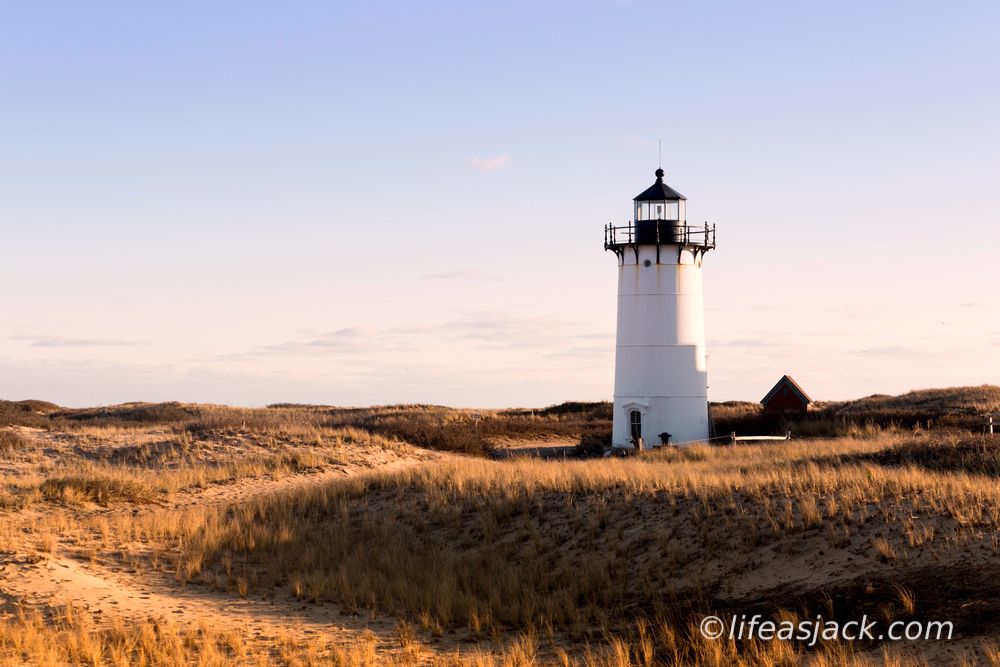
Jack circled the lighthouse. He could capture the tower and keeper’s house, but including the sea would be impossible. He’d need a drone for that kind of elevation. Jack circled around to face the keeper’s house, the sea at his back.

The house was surrounded by the grass, cast gold in the late day sun. But for the tower, it might have been located on a prairie in the west.
The landscape was desolate, and Jack saw no one in his travels. He packed up his gear and headed back towards the motorcycle, the sun casting long shadows now as it began it’s descent behind the dunes.
 An Unmapped Route: A Hiker's Blog