


The turkey is not a beloved bird in America. In my humble opinion it’s not a particularly tasty one. Many will grace the dinner table this week in the U.S. I’ve roasted them in the oven, smoked whole turkeys on a barbecue smoker, even deep fried one in oil. The bird has been traditionally been accompanied by potatoes, gravy, turkey bread stuffing, corn, and a host of other side dishes. The original celebrant’s certainly could not have envisioned today’s feast, nor could they have prepared many of the items we deem traditional. Given their limited resources, They would have been unable to enjoy a slice of pumpkin pie, or a tangy serving of cranberry relish. There would be goose on the menu and venison as well. For most New Englanders, the origins of the feasting holiday become more obscure with time.
On a regular basis, I pass over the Mt Hope Bridge in Bristol, Rhode Island. Mt. Hope, the highest point in Bristol County Rhode Island, can be easily viewed from the span. It was the ancestral home of the Pokenoket tribe, and it’s Sachem, Massasoit Osamequin.
The sachem was in fact the leader of a confederation of tribes known as the Wampanoags, living throughout present Massachusetts and Rhode Island.
It would be Massasoit who would travel to greet the English settlers of the Mayflower which, driven off course on it’s up the Hudson River and into the state of New York, would end up at the shores of Cape Cod, and then finally reach Plymouth, Massachusetts in 1620.
The motives of Massasoit’s journey were many. The “pilgrim fathers” as they would later be called, had spent the first winter aboard the Mayflower, and the harsh conditions and illness had depleted them by half.
The Wampanoag had been practically wiped out by disease as well, their people succumbing to what may have been smallpox before the settler’s arrival. The Wampanoag were vulnerable to attack by surrounding tribes. Massasoit knew a pact with the settlers might benefit his people.
The alliance and cooperation with the pilgrims, helping them with growing crops and settling ashore would be beneficial to both. Osamequin himself might have been saved from an early end when he was treated by John Winslow, who helped nurse the sachem when he became ill at one point.
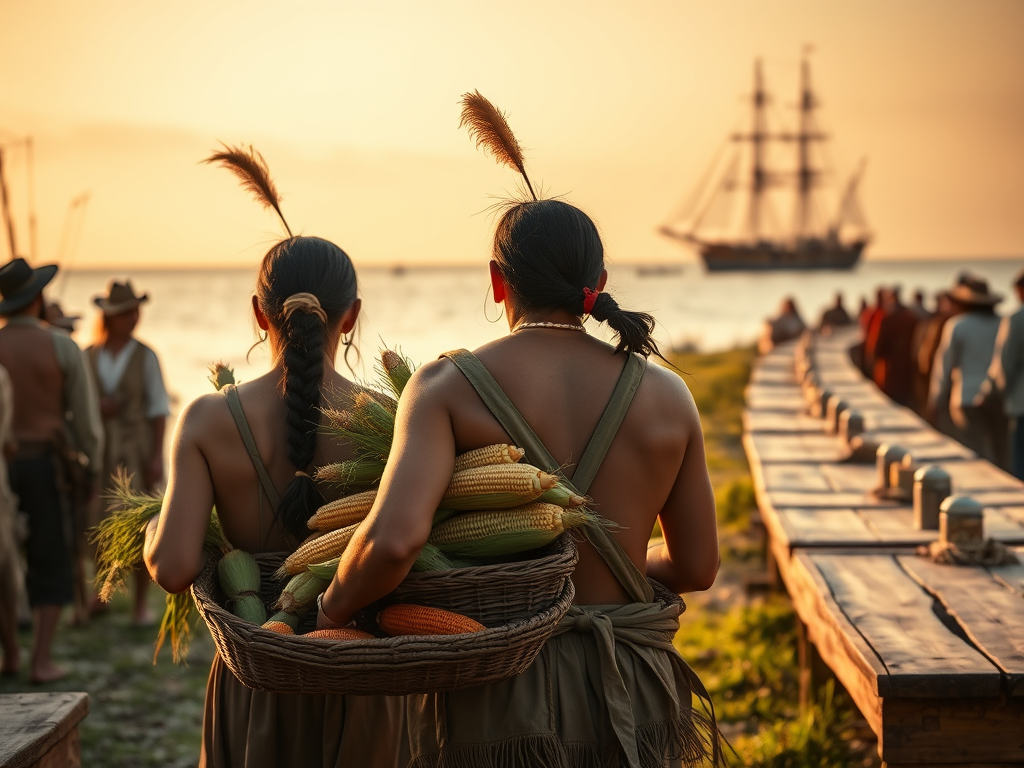
After a successful harvest, both the Wampanoag and the Pilgrims gathered to celebrate their bounty. Harvest celebrations were not new to either, nor invented by them. It’s a common fact that many people throughout history and the world celebrate in similar fashion.
It would not be until the Civil War that President Lincoln would seek to nationalize the practice and enshrine it in the country’s list of observances in an attempt to bring unity to the country.
The treaty and friendship between Massasoit and the English settlers would last his lifetime, but the quest for land and unscrupulous actions by the next generation of both groups would lead to one of the most devastating conflicts of New England’s early history, King Philip’s War.
So what is Thanksgiving to an old school New Englander?
Many traditions still exist that I experienced as a child, including the use of symbols and ideas that simplify the complex history that took place.
At school, children still fashion from construction paper, the black hats representative of the “Pilgrims,” with a gold buckle on the band (the “pilgrims” did not adorn their hats in any such way). Small hands are no doubt still traced on paper, to be colored and represent turkeys, the hapless birds that Americans will cook in myriad ways on the holiday. We might sit to watch the parades that will be broadcast, with marching bands and giant inflatables, announcers bundled against the chilly temperatures.
Mostly, the current inhabitants of New England will not ponder the original celebration at all, but simply the spirit of it. It’s a chance to gather with family from near or far, a respite from work, to cook and partake in a meal together that happens rarely in today’s world where we are separated by distance, schedules and daily hurdles.
Turkeys will be stuffed and slathered with gravy accompanied by mashed potatoes. Cranberry relish will be prepared (I like the real homemade kind , not that stuff from a can.) I’ll be sure to save room for a slice of spicy pumpkin pie. The staples may find their way to the man ya local table, but so might dishes that are favorites of a diverse people that now occupy lands where the settlers celebrated centuries ago.
Pain sorrow, greed and ruthlessness would break the bond between the colonists and native New England tribes in the years that followed the original Thanksgiving, but the spirit of being thankful for gifts borne of labor and persistence after hardship endures, which is a reason to give thanks indeed.
 An Unmapped Route: A Hiker's Blog