

This westernmost peak in Catskills Park is a fairly easy hike in winter. I planned on bagging two mountains on a recent weekend visiting New York. Because the drive would be a long one, I chose to hike Balsam that same day. Hiking it on drive day would also eliminate one of the peaks that was farthest away, and I could start working my way back to collecting closer mountains in the future.
There are many sites that offer reviews on choosing the path to the summit. After a little research and poring over topo maps, I chose to hike to the top from the Millbrook Road Trailhead.
A five hour drive placed me at the trailhead at 10:00. I had stopped along the way for breakfast and was slightly behind my planned start time.
A few inches of snow covered the ground. The parking area was nearly empty. I’d borrowed a car to make the drive, and left it behind, crossing the road to the trail.
I carried my winter pack setup with water, a spare layer, food, batteries, snowshoes, spare gloves and goggles, a face mask, headlamp and the rest of the ten essentials.
I had fitted my trail spikes before leaving the lot.
The sun was weak and low in the sky.
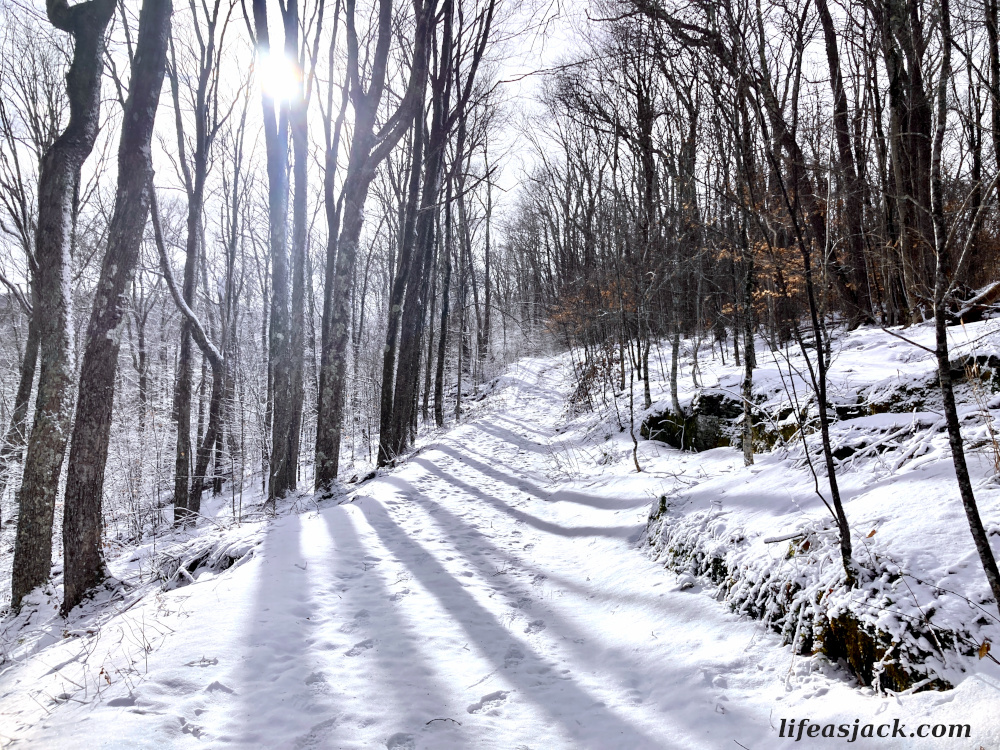
The trail is an old access road to the fire tower that sits at the summit. The grade was gradual and easy to hike. I started slow. This would be just seven miles round trip, but the pack was heavier than usual with the snowshoes.
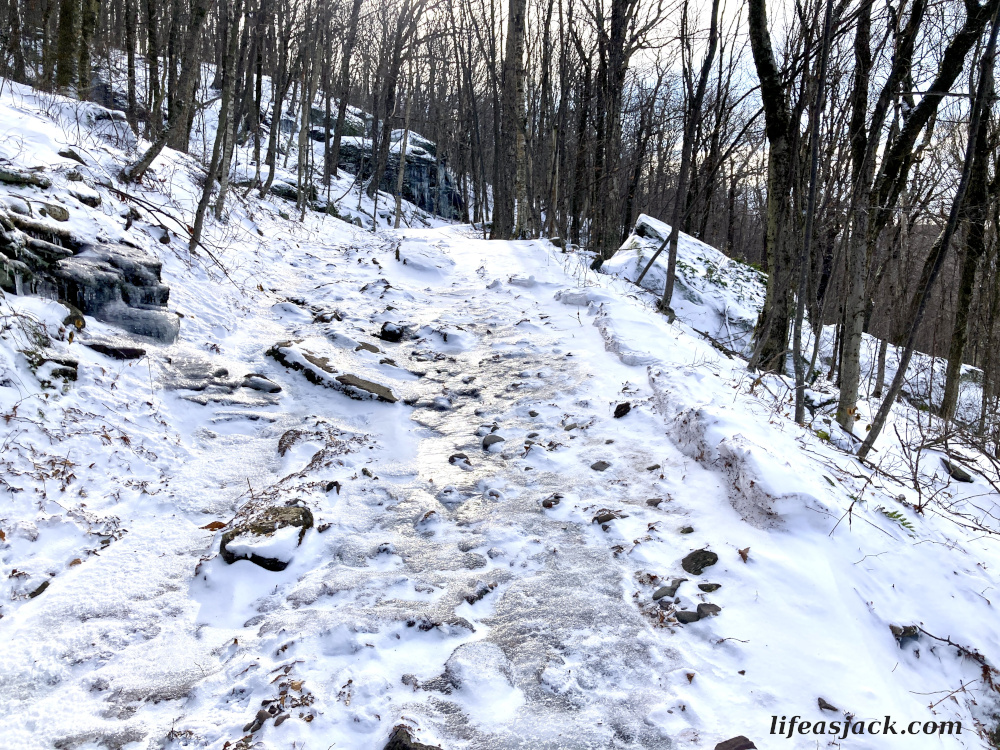
Some early sections of the trail were quite icy. The road serves as a natural channel for melting water running down from elevation. Freeze/thaw conditions made spikes a must.
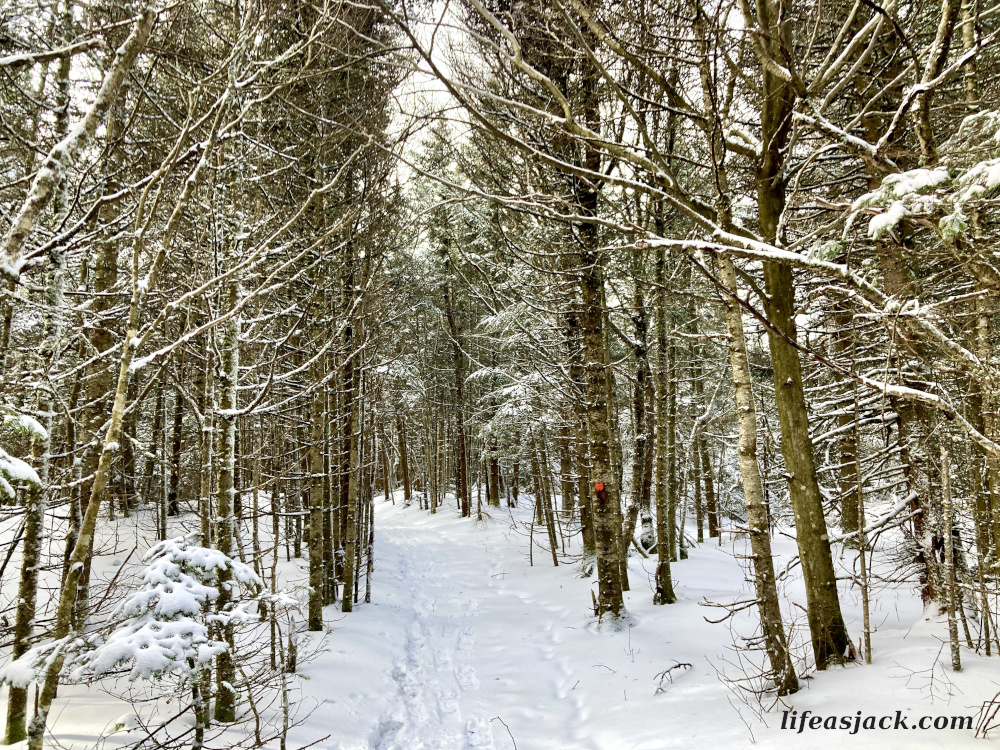
I passed through several stands of forest that were beautiful, and as I progressed the snow became deeper, with some drifts along the trail. A young hiker had passed me on the way to the top. I followed her tracks and another previous hiker’s footprints in the snow.
Exiting the Dry Brook Trail, (blue blazes) I turned right onto the Balsam Lake Trail (blazed red). The snow was undisturbed here but for a single set of tracks. The young hiker who had passed me had put on her snowshoes, and I did the same. I was glad to have her in front of me doing the initial trail breaking.
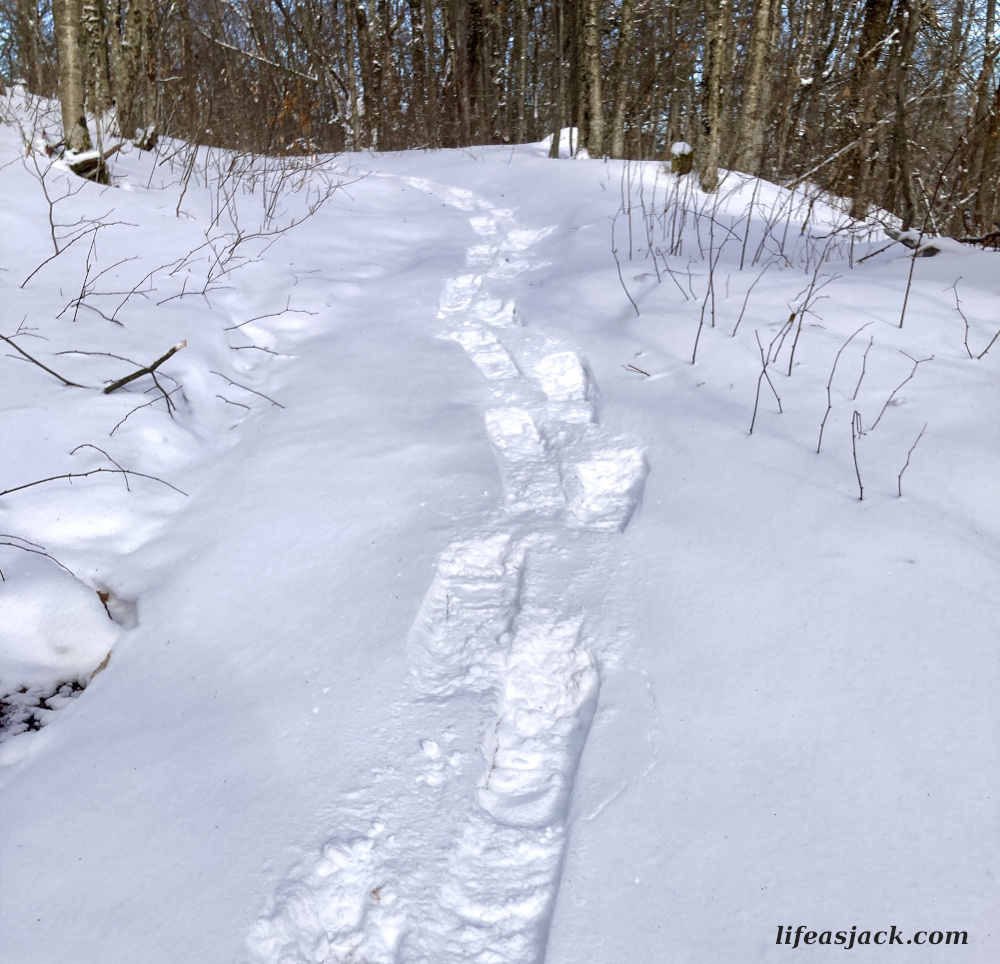
I carefully checked my snowshoe bindings before leaving home to be sure they were in order. I’d gone back and forth in my head at the trailhead trying to decide if I wanted to carry them at all. Now I was glad I had made the correct choice.

Wearing the correct traction for ground conditions makes a big difference in speed and energy conservation. I actually travel much faster in snowshoes in deeper snow than bare boots. The snowshoes provide “flotation” and keep me from sinking calf deep in the snow.
I made good time, and the sun began to break through the overcast. Ahead I could see the proverbial “light at the end of the tunnel” of forest.
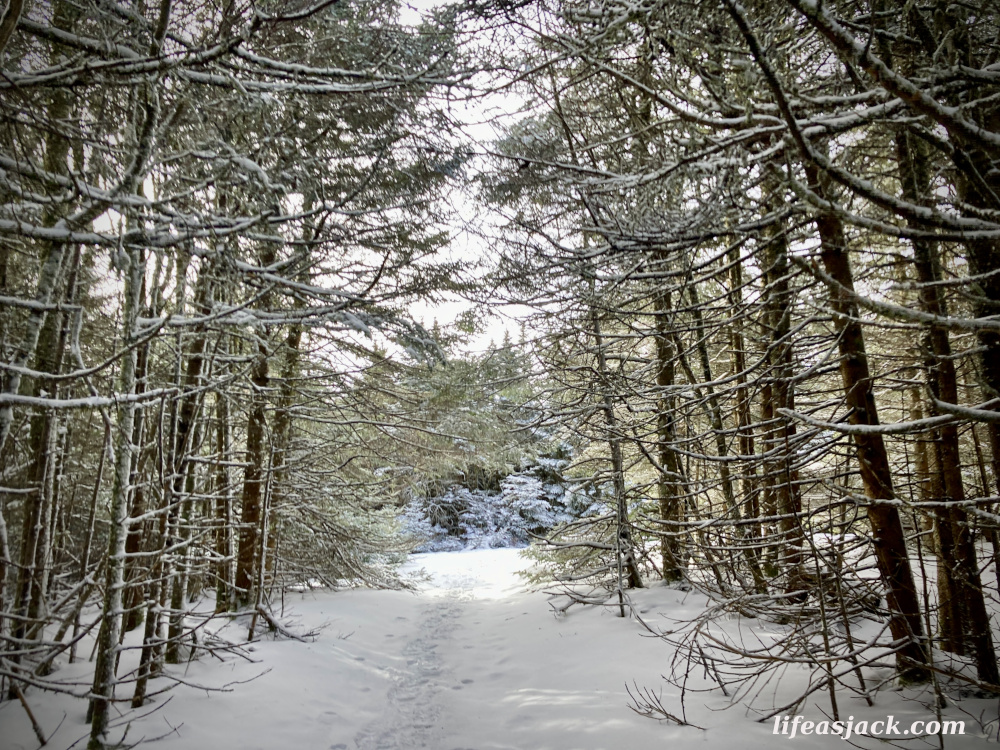
Approaching the summit, two hikers passed me heading for the trailhead. I was disappointed to note they were not wearing snowshoes. They would sink into the trail up to their knees on the way down, and if they walked in my tracks, destroy the snowshoe trail that had been created.
Arriving at the summit, the fire tower was just to my right in the clearing.
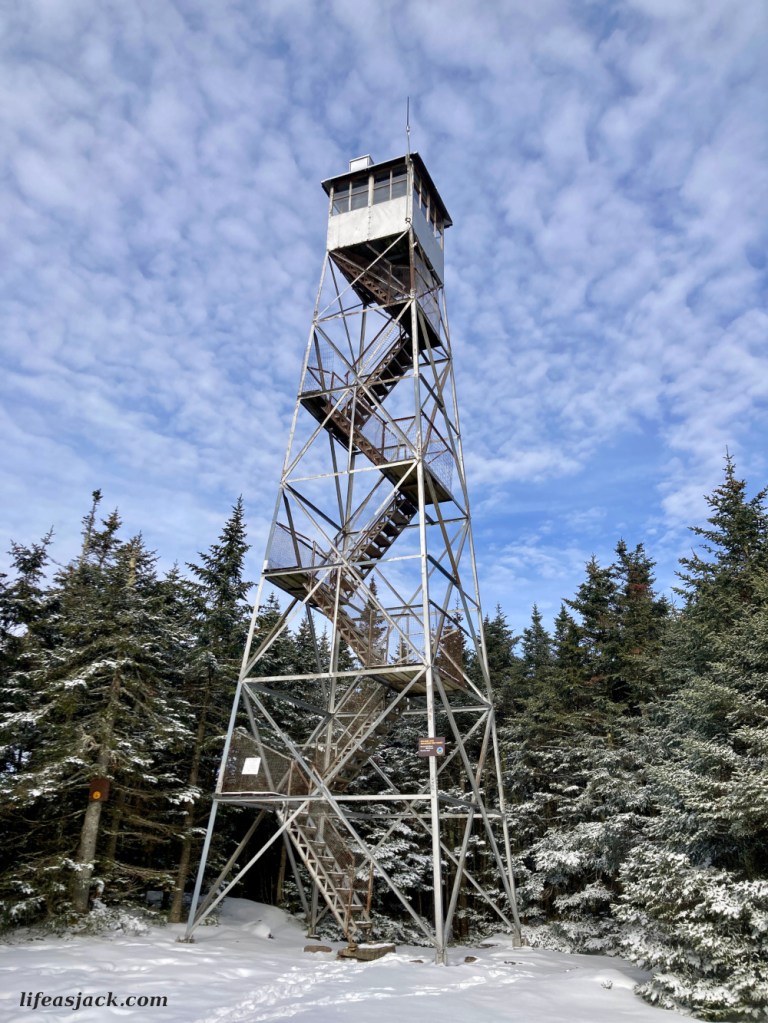
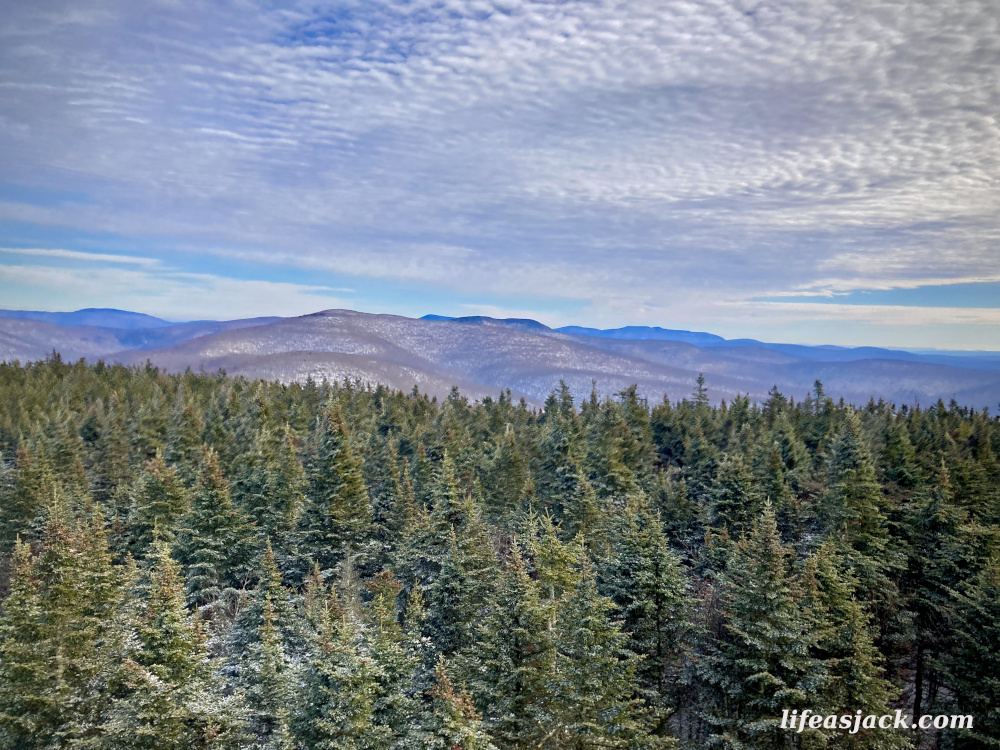
The young female hiker whom I’d followed to the top was descending the tower. We exchanged greetings and I dropped my gear at a picnic table near the base. It was windy at the top, but worth the climb for a view.
Below, my fellow snowshoe hiker was gearing up and moving on. I decided to do the same.
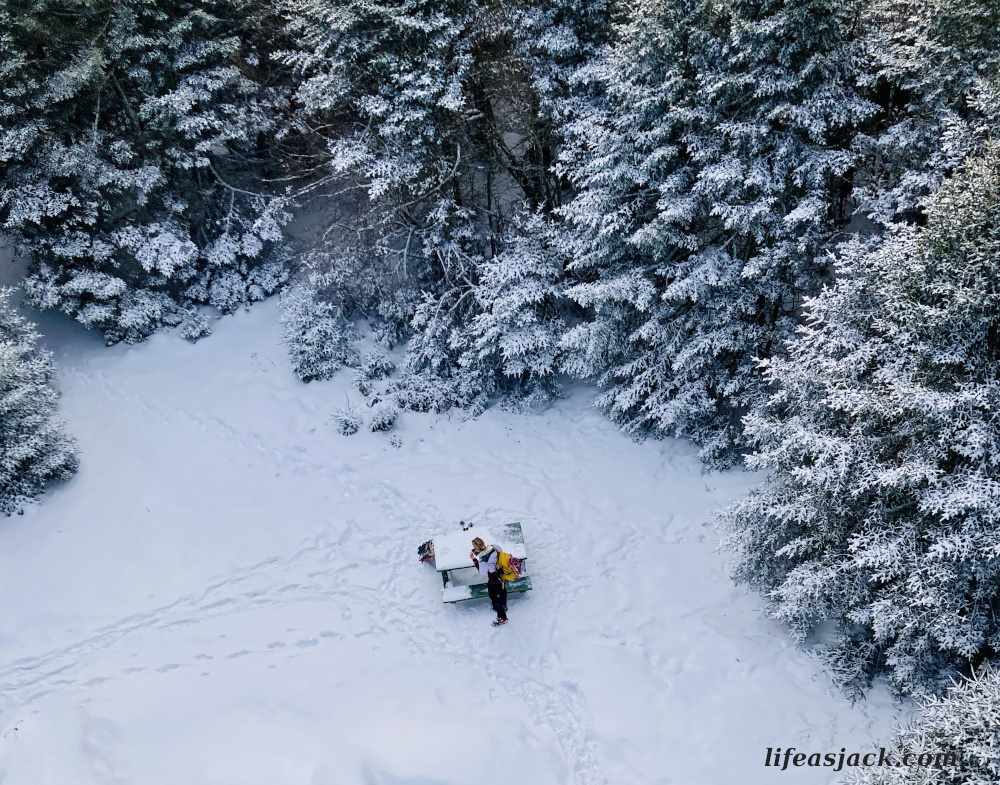
The sun began to retreat, losing it’s battle against the winter skies, and the air began to chill with its exit. I returned to the table, geared up and made a hasty exit now that my goal was reached.
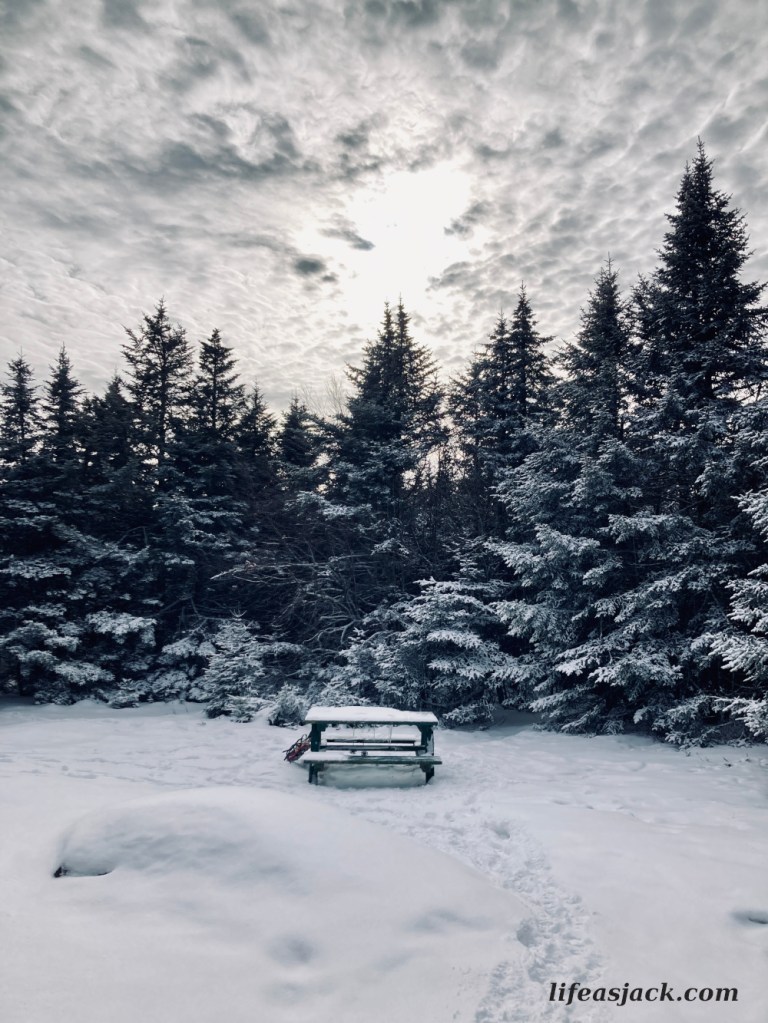
With the snowshoes, I flew down the mountain. I left them on as long as possible to make the best speed with the least exertion. My round trip was three hours, approximately seven miles and around 1700′ of elevation gain. A nice hike, and so good to be in snowshoes again.
 An Unmapped Route: A Hiker's Blog
Comments
8 responses to “Balsam Lake Mountain”
Wow, wow, wow. I adore snow. Winter hikes have a special kind of stillness, and this post and the amazing snow pictures captured that beautifully.. Thanks for sharing..
LikeLike
I’m glad you enjoyed the post. Winter hiking is my favorite, the beauty and the quiet as you noted are unmatched. To hear the snow fall silently in the woods cannot be described but must be experienced. Thank you for reading.
LikeLiked by 1 person
Very lucky. Wish to experience it again in the near future
LikeLike
How beautiful, Jack. I love seeing the snowshoe footprints, too. I enjoyed the photos and your adventure overall. Keep sharing like this. I love it.
LikeLike
Thank you, I’m glad you enjoyed the post. It’s nice to have you “along for the hike”.
LikeLiked by 1 person
I love posts like this, and it’s my pleasure to stop by, Jack. Happy Sunday!
LikeLike
[…] December 2025, Catskills Park: The snow covered branches seemed to reach out to me from the edges of the trail at the start of the hike to Balsam Lake Mountain. […]
LikeLike
[…] day before attending this event, I solo hiked Balsam Lake. Bagging Rusk meant I could collect one more before returning […]
LikeLike