
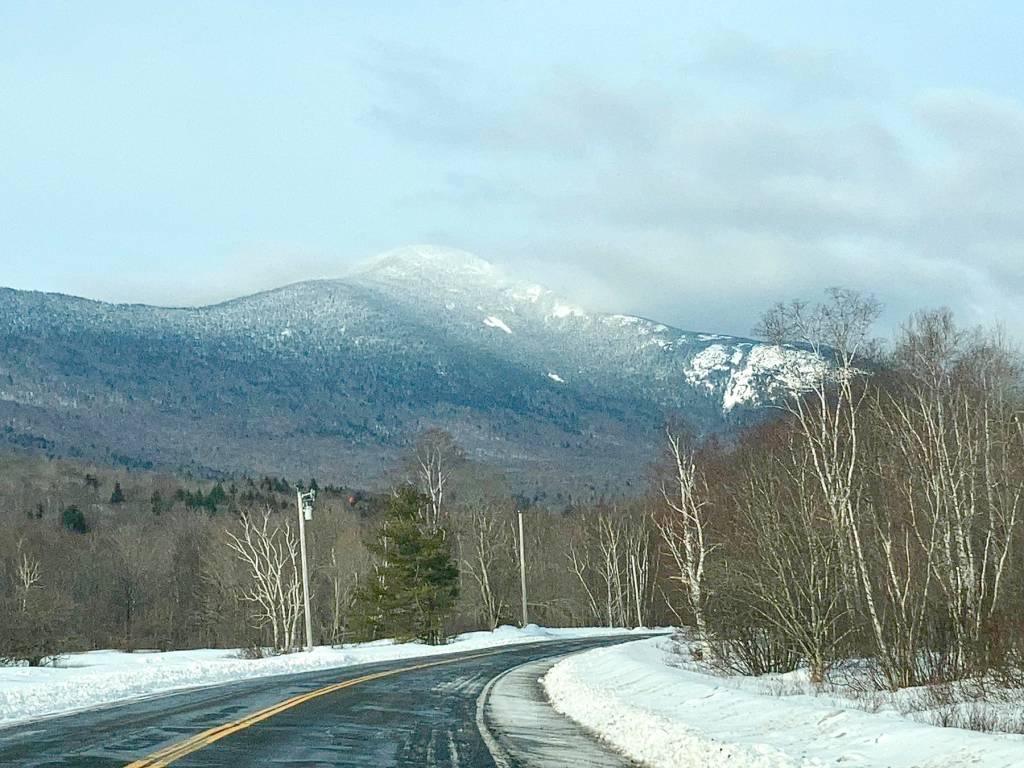
Many of the mountains of New England now lie under a blanket of snow, months away from the spring and summer thaw. I have hiked in the mountains in winter many times, solo and in groups. Proper preparation and knowing my limits have served me well. I was never afraid of my circumstances until one day several years ago in Vermont.
My two companions and I had decided we would hike Mt Mansfield, the tallest mountain in Vermont. I was not leading the hike. My friend William needed it for a winter hike list, and had planned the foray. Because I needed it as well, I was one of the hikers in the group. All three of us had many winter hikes under our belts and were prepared to hike in winter.
It was snowing at the base of the mountain when we arrived, and quite busy with skiers heading for the chairlifts to nearby peaks. We chose a different route to the summit. A snow covered trail took us into the woods. Before arriving, I was a little concerned that we’d decided on this date. The forecast was for snow and strong winds. At the peak it would mean ice, lots of snow, very cold conditions and limited visibility. I prefer nice weather when I hike. I’m prepared if the weather turns, but why plan a leisure activity on a day with poor weather? William did not want to cancel, and had a strict hike calendar.
Breaking Trail
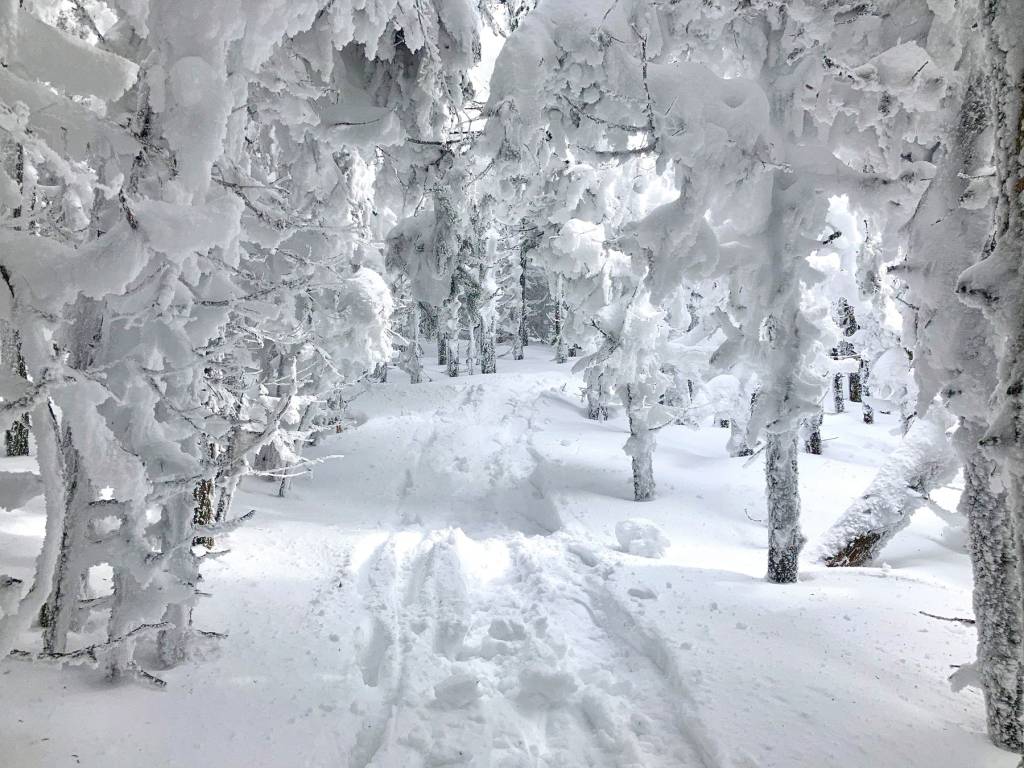
Our trail to the summit had not seen any foot traffic in a while, and was deep with virgin snow. We needed to “break trail” – create our own track through the deep snow to a hut below the summit. We lost the trail a few times, were forced to backtrack and finally slogged our way to the hut. Sheltered from the wind on this side of the mountain, we continued on snowshoeing through the drifts to the summit, but we soon realized we were off course. William wanted to press on, but as time passed I became more concerned. We were threading our way along a slope dotted with “Spruce Traps.” Deep snow surrounded the trees, and should one of us slide down in the soft snow surrounding the tree, it would be very difficult to get out. William seemed fixated on getting to the top of the mountain. I should have seen that “summit fever” had set in.
Point of No Return
Definitely off trail now, we began climbing a steep ridge to the peak. William was in front, myself and George behind. The wind was blowing hard on the ridge, driving snow across our bodies, into our faces. Suddenly William stopped. I climbed up to him. He had hiked to a small outcropping and was in soft, deep snow. the ridge had a steep drop to our right, and we were just fifteen or twenty feet from the top. One misstep could mean a long uncontrolled slide down the steep ridge. I looked back. George was looking for a way out, left or right. We couldn’t backtrack the way we’d come, it was too steep. I was annoyed that William had lead us to this point, and angry at myself for following him. He seemed unsure. There was only one way to go now- up. I don’t know how I did it. I summoned the courage, dug in my snowshoes and crabbed my way up. My heart was pounding in my chest. My water bottle fell out of my pack in my crouched stance as I climbed, and I watched it tumble hundreds of feet down the steep slope to my right. The wind was blowin’ a gale, a mournful noise in my ears. I crawled over the lip of the ridge, onto the top of the mountain. The wind cut through my layers, sharp and cold. I quickly pulled a puffer jacket out of my pack and put it on, covering it with my hard shell jacket. I always carry snow goggles, and I put them on as well. Visibility was a few yards. I was alone.
Alone on the Summit
I could not see my companions over the steep edge in the driving snow. Were they still there? Had one of them fallen and was badly injured? I was really angry now, and in a difficult position. I was separated from them by only a few yards, but it might as well be miles. How long could I stay here and wait?
“We Have to Get Down”
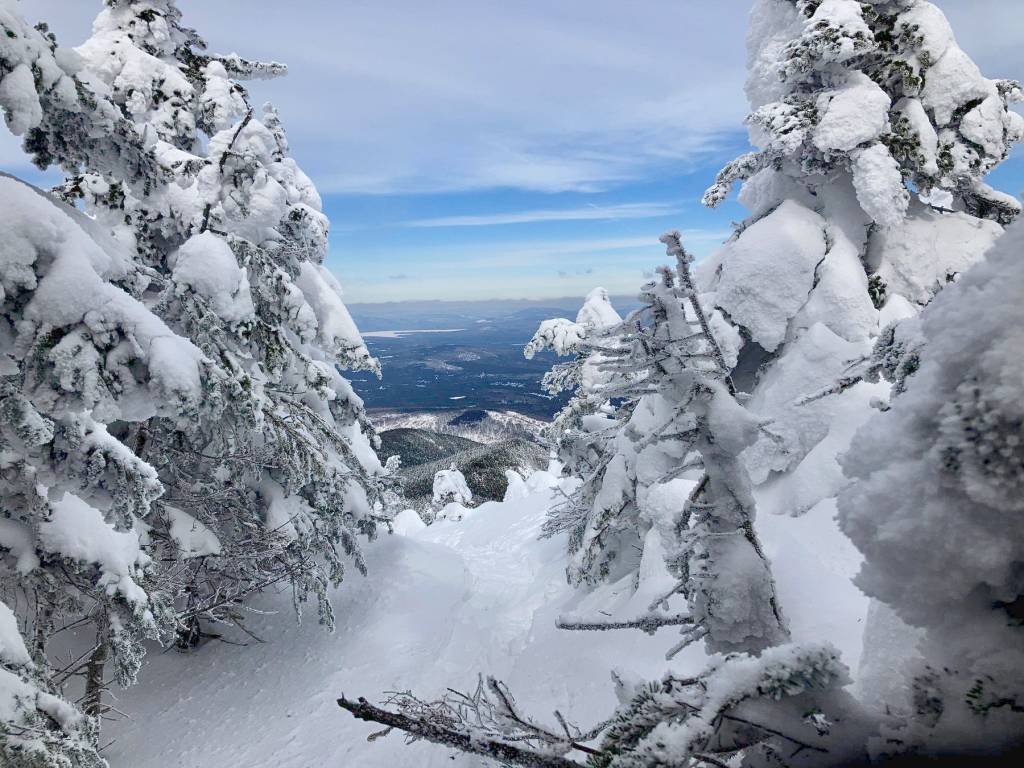
Suddenly William climbed up over the edge, and moments later George followed. We gathered to get our bearings. We located a trail sign, but if followed, it would lead us down the wrong side of the mountain. William said “We have to get down” He located a clear and open slope that would lead us back towards the direction of the hut. The snow was quite deep, and we had to fight to control our progress, sliding down the slope. I knew our path was dangerous. Buried in the deep snow, sliding quickly into a rock or branch would mean a broken leg or serious injury. After a time, we arrived back at the hut. Our time on the mountain seemed unreal to me now.
Our Paths Diverge
The hike out was without incident, but I made clear that I felt we’d made bad decisions and had narrowly escaped some unpleasant circumstances. Perhaps William took it personally? Maybe I meant him to. We hiked a few more times that summer, but I began to assert my position on hikes more when we were making decisions, and we both seemed to find other things to hike that weren’t on each others list. Finding a good hiking companion can be hard. I’d always enjoyed our hikes, but deep down I felt that one day William might again convince me to follow a path against my better judgement and put us in harm’s way. Several years have passed since our last hike.
I hope wherever he is hiking, he is doing well.
 An Unmapped Route: A Hiker's Blog