

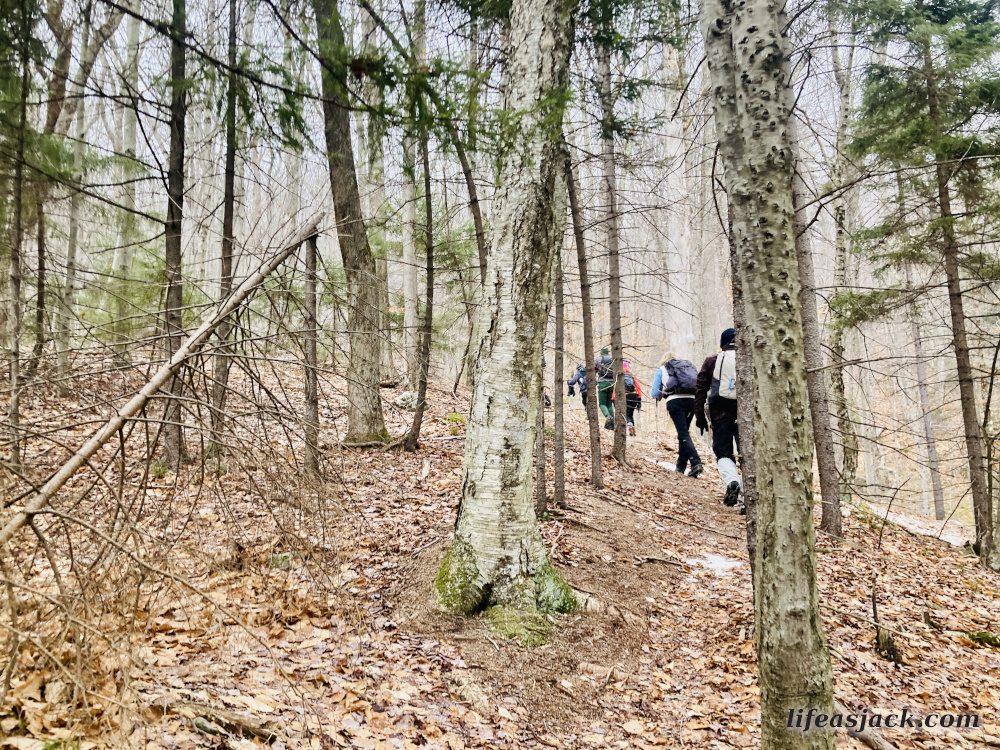
The hike to Rusk Mountain in the Catskills is a bushwack. A “herd path” leads to the summit. The path is faint but visible, having been created by the numerous hikers seeking the peak. The path is not blazed, or marked on the trees to guide one to the orange canister located at the top.
I could have navigated by compass and altimeter, and my GPS offered a crowd sourced path that would lead me to my goal. Instead I chose to join a hike led by a member of the Catskills 3500 Club. Hike leaders from the club host hikes in Catskills Park year round, and I thought I might try a group hike with some of it’s members.
The day before attending this event, I solo hiked Balsam Lake. Bagging Rusk meant I could collect one more before returning home.
The Rusk hike is short, coming in at approximately 5Mi/8K, and not particularly rugged. It was however, a bushwack in unfamiliar territory in winter. I was confident in my ability, having completed several in the Whites Mountains of New Hampshire and Vermont for the 100 Highest List, but decided to give the local experts a go.
The group gathered at the Spruceton Road Trailhead. I had been here before for my hike to Hunter Mountain in December.
The party numbered 8. I had already geared up with winter boots, gaiters, a heavy base layer, a fleece and a lightweight down jacket. I wore a face mask, but pulled it to my chin to greet the other hikers during introductions.
All members put on trail crampons before the hike start due to some ice on the trail. We briefly followed the Spruceton, but then detoured into the woods crossing a small stream.
The path wound it’s way uphill at a steady rate, and I soon had to “drop a layer” to keep my temperature in check. Shedding insulating layers is necessary in winter hiking to thermoregulate one’s body temperature. Removing clothing or lowering one’s hike speed can be necessary to keep from sweating. Soaked clothing can lead to hypothermia. Wet clothing close to the skin cools the body’s core temperature carrying away precious heat. It’s important to wear moisture wicking garments and maintain an appropriate core temperature while ascending and during the descent.
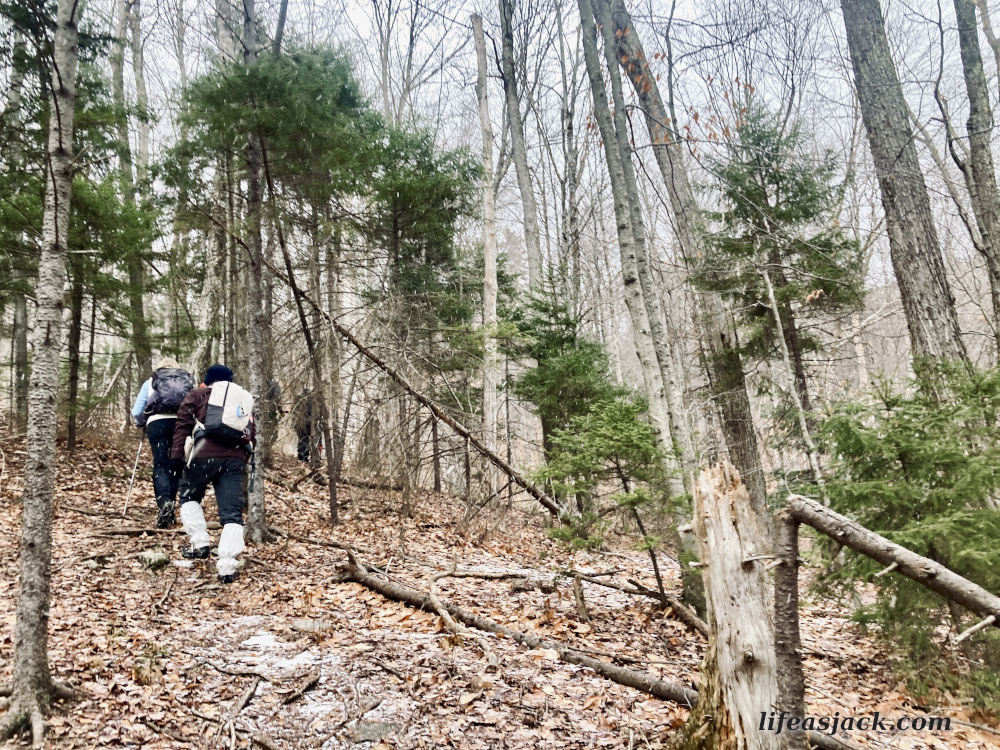
After a little more than an hour our guide directed us to the canister at the summit, where we were offered the opportunity to add our names to a list of finishers stored inside.
Before leaving, our host guided us a short distance away to one of the mountain’s only views. I can’t say that I would have found the spot, and was glad to have joined the hike to benefit from the knowledge of the locals.
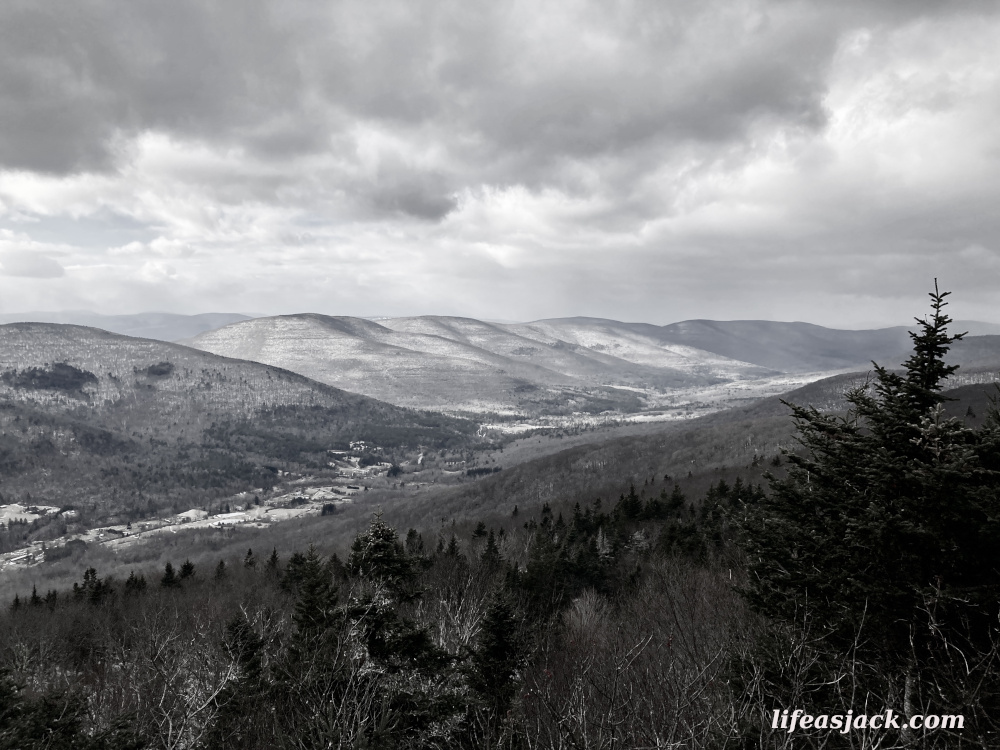
Here at the summit, there was very little snow, yet only a half hour’s drive away I had needed snowshoes the day before!
We backtracked out to the trailhead the way we had come. A few snow showers popped up, but not heavy enough to require adding a shell layer or amounting to any ground accumulation.
Hiking with the club members was a nice experience. I will definitely sign up for a few more with the Club in the future and mix it in with my solos in 2026.
 An Unmapped Route: A Hiker's Blog